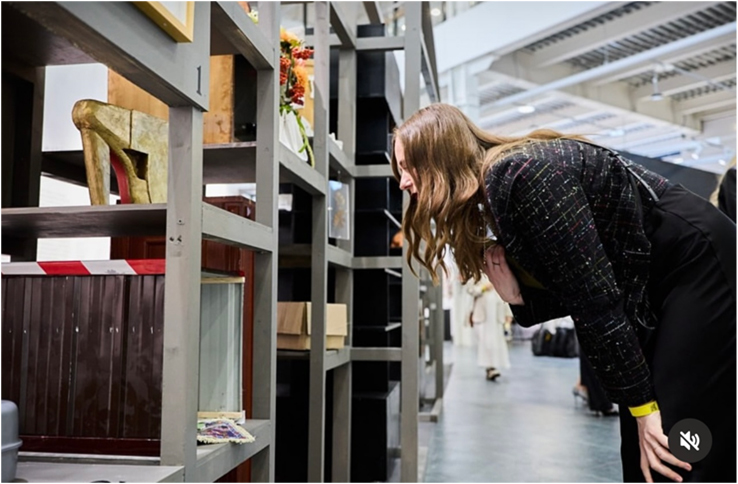
This project intertwines personal and collective narratives, offering a space for reflection, healing, and transformation. It highlights the Factory’s legacy as a place where creativity and community converge, making it a powerful contender for the “Institution of the Year” nomination, which was presented at the Cosmoscow Fair.
Artists Katya-Anna Taguti (@taguti8888) and Alexandra Moiseenko (@moiseenko_art) presented their project “System of Co-Preservation. Part 1”. Winning the open call in the “Experiment at the Factory” nomination, the artists invited all participants to “place” inside each vessel/container/capsule/box their:
— Unfulfilled desire,
— Resentment,
— Fear,
— Memory,
— Dream,
— Jealousy,
— Memory of a beloved lost object,
— Betrayal of friendship, and so on.
This project serves as a form of art therapy, offering a way to give shape and meaning to the fragmented and uncertain world we currently inhabit. It provides an opportunity to co-preserve something sensitive and positive, giving us hope, or to bury the traumatic and painful experiences that trouble us and prevent us from moving forward—bury them and live on.
The installation also featured pieces of furniture found in the Factory’s warehouses: dusty, broken, forgotten, and stripped of their functionality. These objects gained a “new visibility” as witnesses to the history of the former technical paper factory, which transformed into a creative cluster. For 20 years, art was born here, and this project represents its DNA: horizontal connections, shared stories, pain, and hope.
Installation “Co-Preservation System. Part 1”
Fabrika CCA (nominated in the “Institution of the Year” category) at the 13th International Contemporary Art Fair Cosmoscow 2025, Moscow.
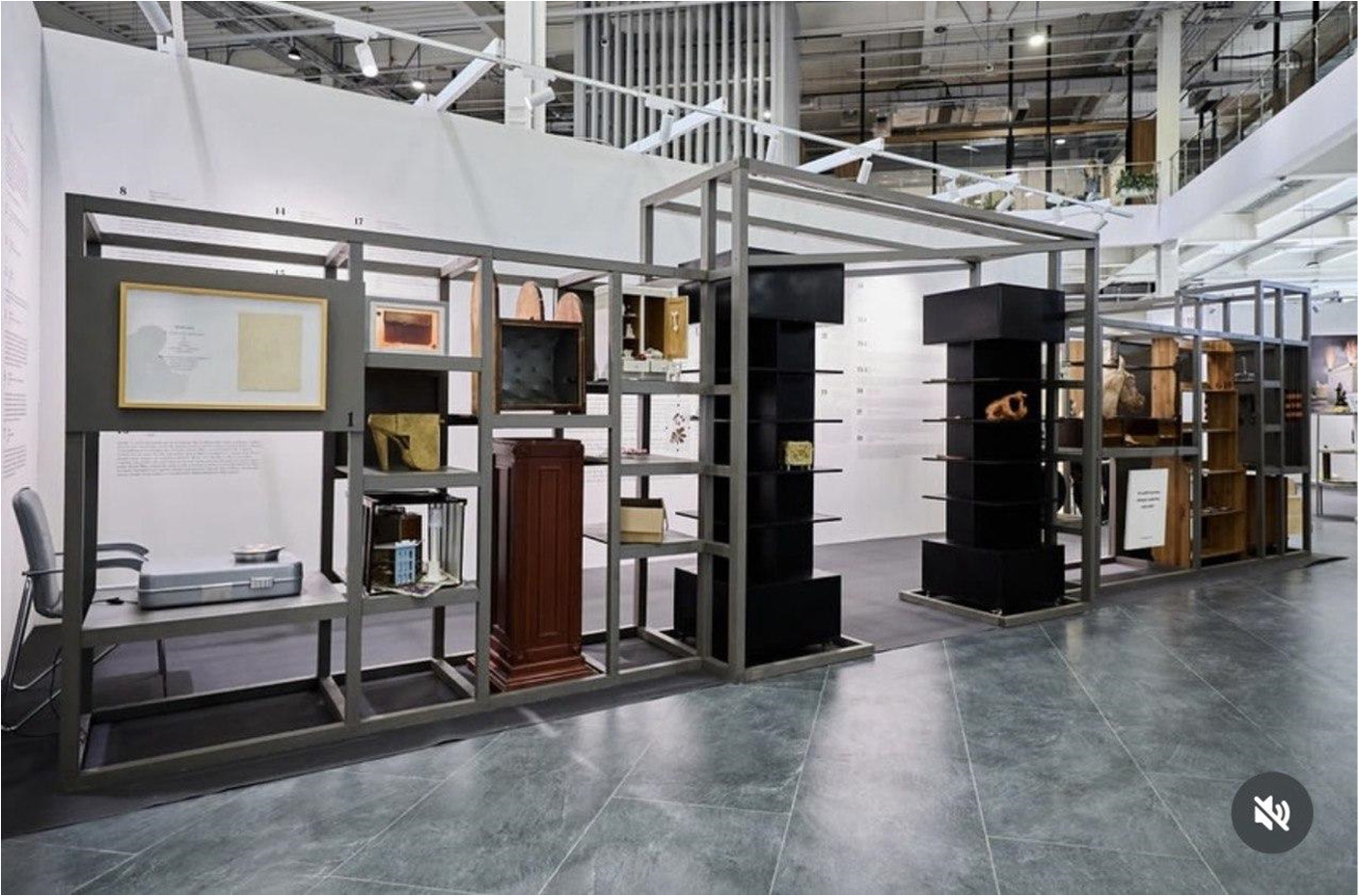
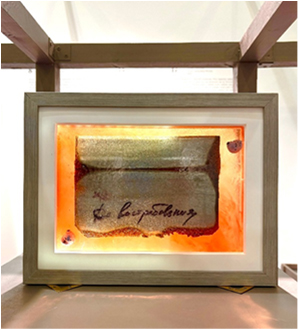
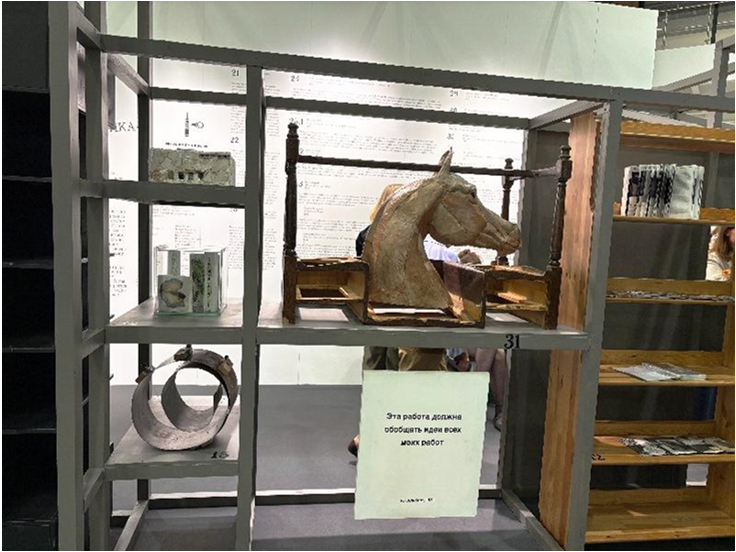
Artists and curators: Katya Taguti and Alexandra Moiseenko,
curator Liza Movchan,
architect Sergey Lutsenko.
Installation “Co-Preservation System. Part 2”
Zverev Center for Contemporary Art, Moscow, 2025
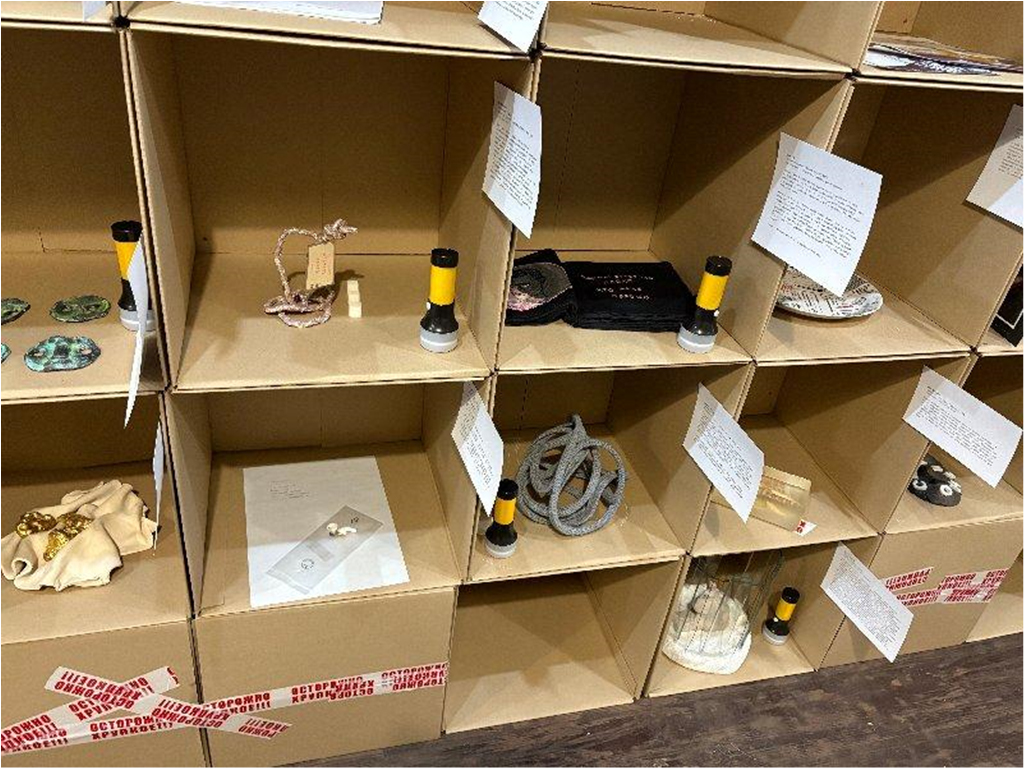
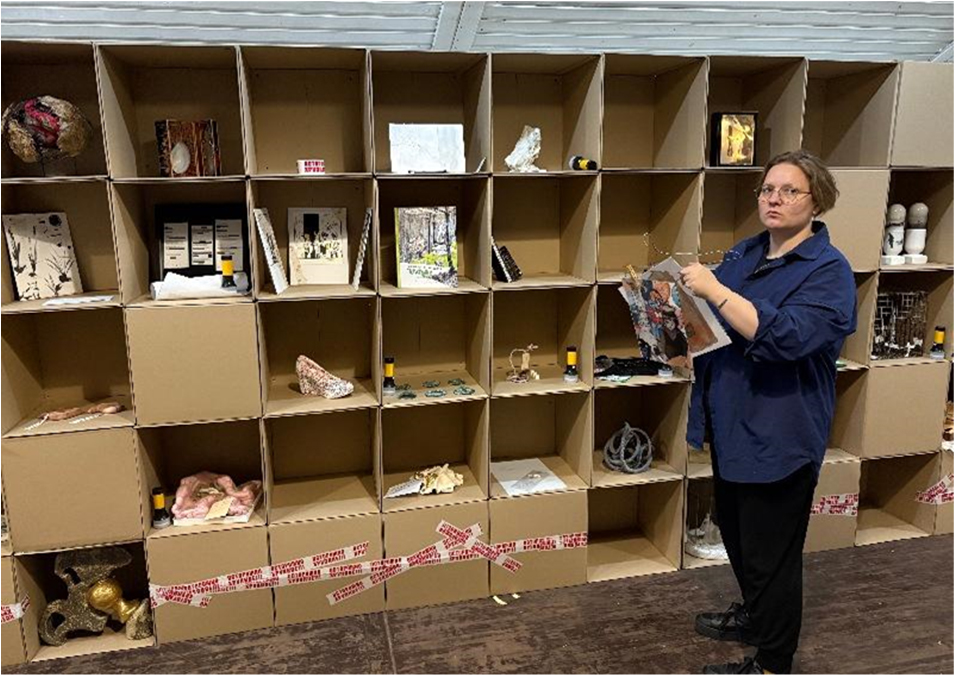
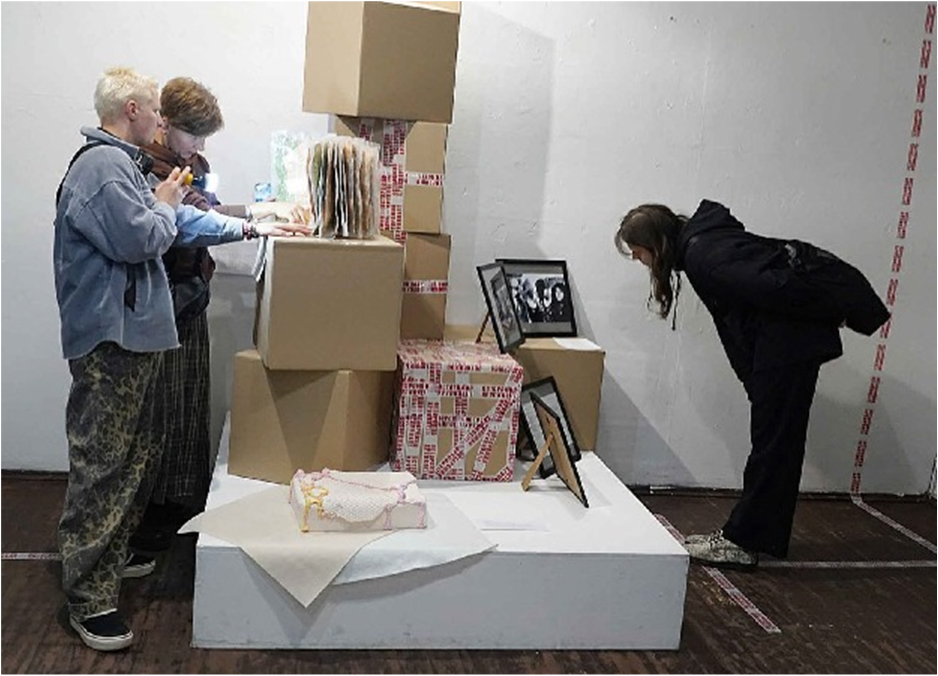
Artists and curators:
Katya Taguti and Alexandra Moiseenko.
The installation “Co-Preservation System. Part 2” is a shelving unit made from ordinary cardboard boxes of the same size. We selected 45 artists through an open call, providing each participant with their “own box”. A prerequisite was that they not only create an object but also write a text describing what and why the artist wishes to preserve or bury.
These boxes have haunted us all since the pandemic, when we began to embrace various forms of delivery en masse, and then, when we began moving to new apartments, cities, and even countries. We put valuables in boxes “for later”, for some “bright future”; in boxes, we keep photo albums of our grandparents, family mementos — the “poetics of jingling trifles”*. Our past, future, and now present lives are contained in boxes, because we don’t know “how to live it”, because we are confused and at a loss. Cardboard boxes have become a symbol of our existence, and the sound of ripping tape is associated with something more meaningful, accompanying the daily routine of separation and loss.
*Yulia Tikhomirova, art historian
Installation “Co-preservation System. Unstable States”
Fabrika CCA, Finishing Workshop, Moscow, 2025
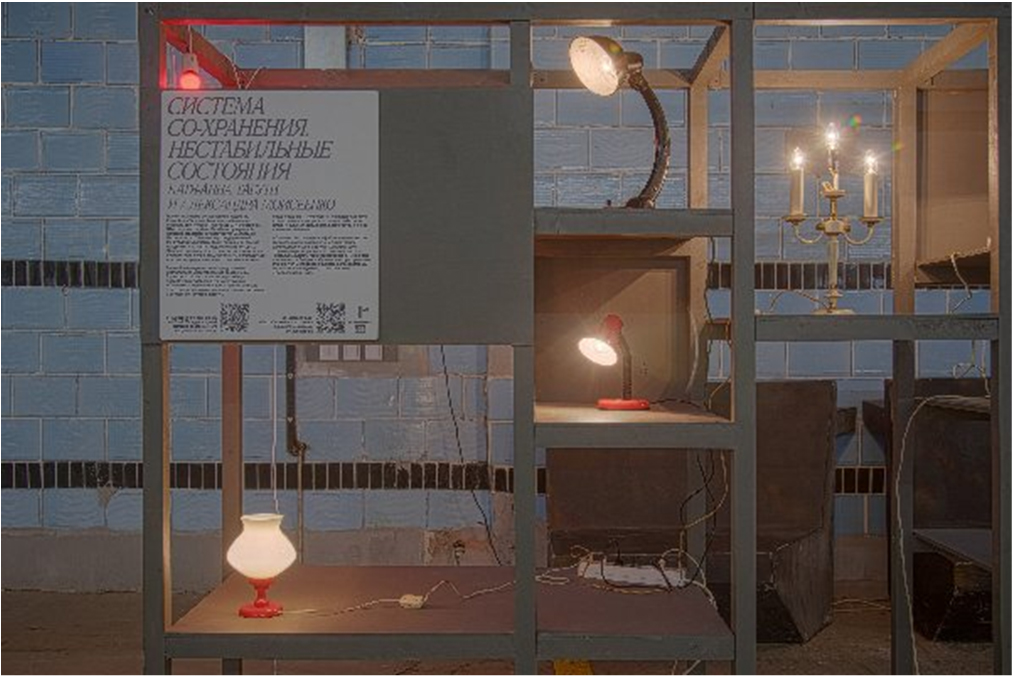
Artists and curators: Katya Taguti and Alexandra Moiseenko,
curator Liza Movchan,
architect Sergey Lutsenko.
The new iteration of the project features the installation “Unstable States”. The artists illuminate the wooden structure of the “Co-Preservation System” both literally and figuratively — its state of instability. Heterogeneous and unstable processes lead to spontaneous and unpredictable actions, emotional outbursts, and the difficulty of finding meaning in the dark. The “Co-Preservation System”, in the factory context, is a catalyst for shadows, penumbras, glare, and reflections, distributing them around itself with the help of diverse light sources — table lamps, floor lamps, and lanterns from the Factory’s archives and storage rooms. The physical space becomes a metaphor for the fragile balance between the visible and the invisible, the conscious and the subconscious.
Liza Movchan, curator